The Velvet Underground & Nico · 1967
Banana
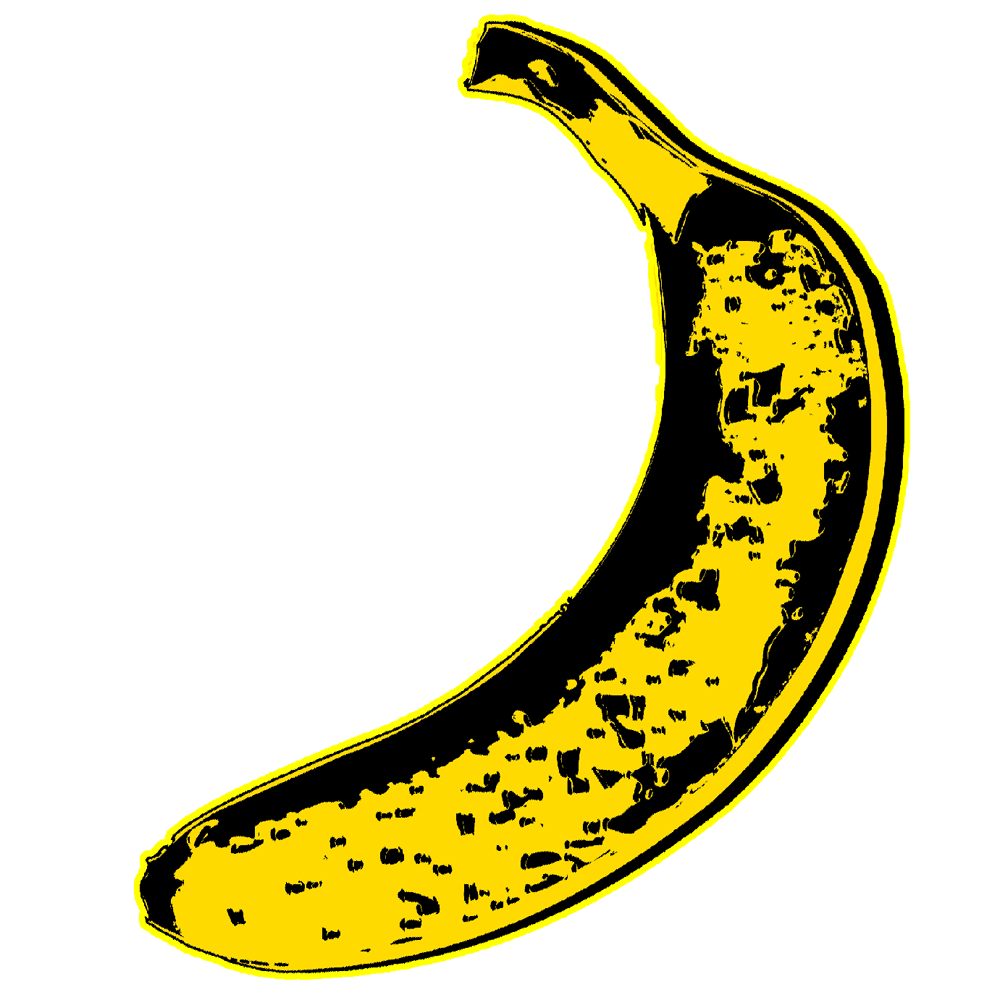
The cover Warhol designed for the band he managed — a single bright banana; early copies had a peelable skin revealing the pink fruit beneath. Real artwork ©
231 East 47th Street · New York
Step inside the silver studio of Andy Warhol — where art was manufactured like soup.
Pop Artist · Filmmaker · Machine
“In the future, everyone will be world-famous for 15 minutes.”
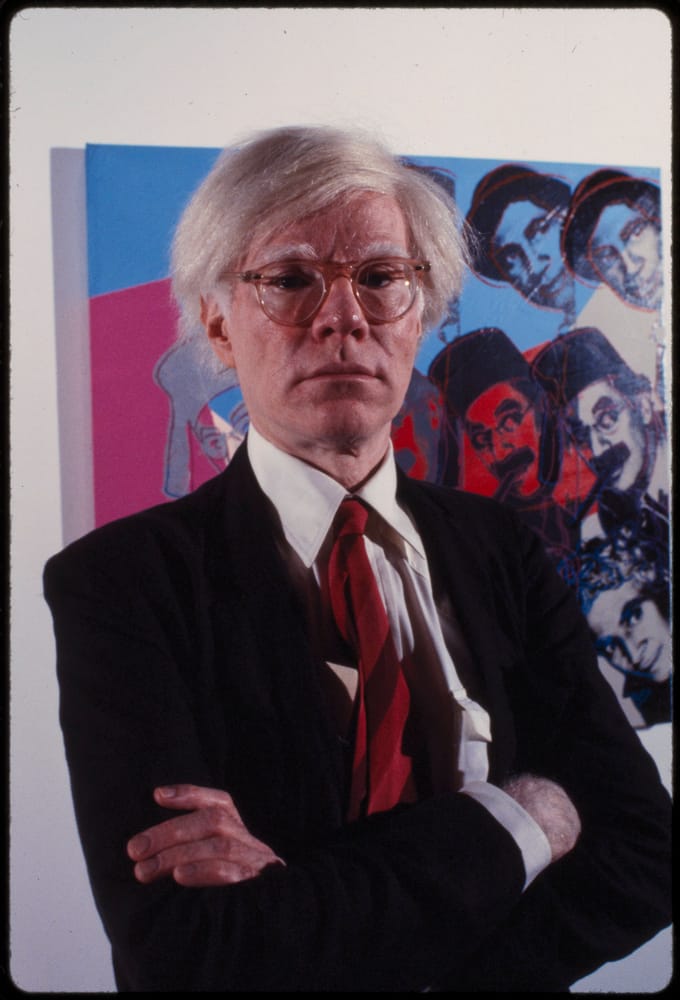
Who he was
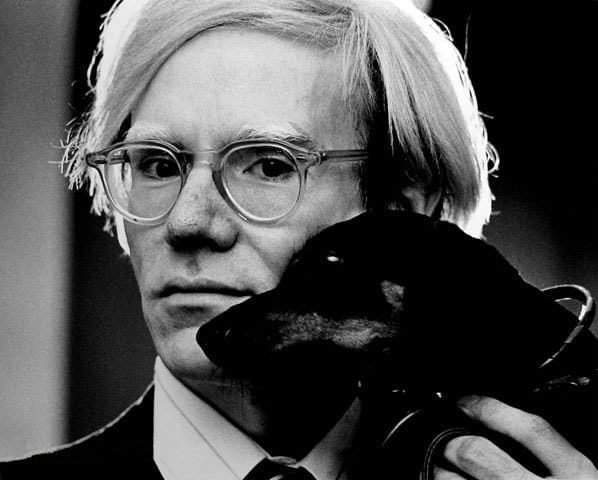
Born Andrew Warhola to Carpatho-Rusyn immigrants in Pittsburgh, Warhol trained as a commercial illustrator before becoming the central figure of Pop art. Around 1962 he took the imagery of mass culture — soup cans and Coca-Cola bottles, which he painted by the deadpan dozen, and then, through the mechanical repetition of the silkscreen, the faces of Marilyn and Elvis.
He blurred the line between commercial and fine art and asked uncomfortable questions about fame, money, media and mortality. He made films, managed the Velvet Underground, founded Interview, and turned his studio, the Factory, into the most glamorous room in New York.
Ferus Gallery, Los Angeles · 1962
Campbell's
In July 1962, Warhol showed 32 canvases — one for every variety of soup Campbell's then sold — lined up on a shelf-like ledge at the Ferus Gallery. The 32 were hand-painted, not yet silkscreened; a nearby dealer mocked them by stacking real cans in his window at “two for 33¢.”
But the gesture was the point. By painting the most ordinary object in America with the deadpan flatness of a label, Warhol collapsed the gap between the grocery aisle and the gallery. “A Coke is a Coke,” he said — the same for the President and the bum on the corner.
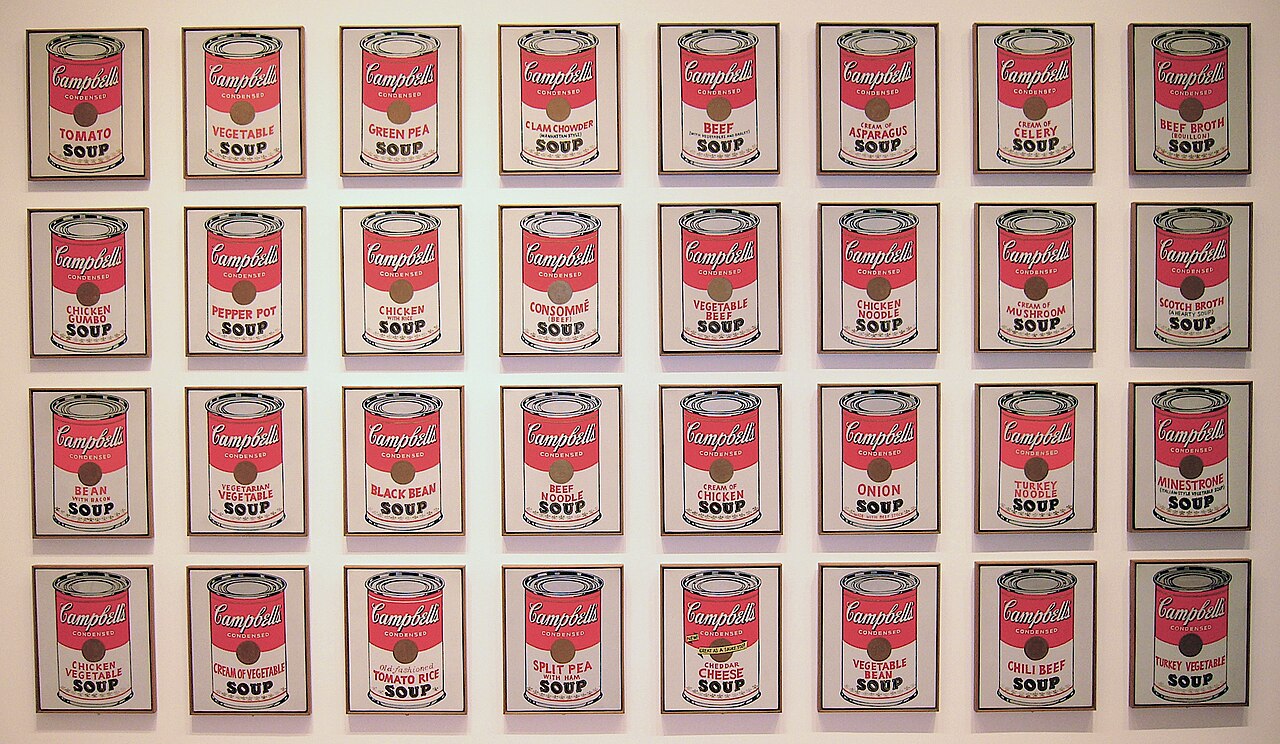
A pop homage, drawn in CSS — an evocative selection of varieties, not the exact 32 canvases:
After her death · 1962–67
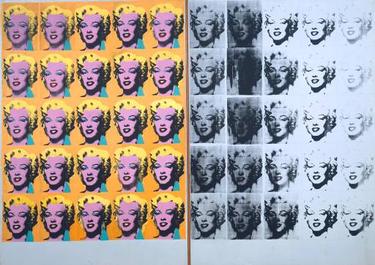
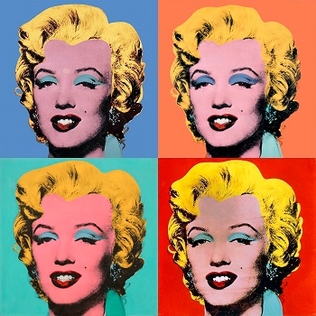
Made just weeks after Monroe’s death, Warhol ran one 1953 publicity photo through the silkscreen again and again in clashing colours — a movie star turned into mass-produced wallpaper, beautiful and slowly fading.
Interactive recreation — the same photo screened ten ways. Tap any panel to re-colour it, or re-print the whole screen:
Silver screen, silver paint
1963
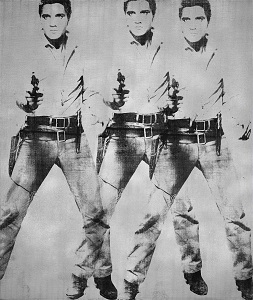
Elvis as a gun-drawing cowboy, lifted from the film Flaming Star and printed in overlapping repeats on raw silver. The cinematic stutter fuses Hollywood masculinity, the Western myth and the flicker of celebrity into pure motion.
1972
After Nixon’s visit to China, Warhol screened Chairman Mao’s official portrait and scrawled garish, lipstick-bright colour over it by hand — treating a communist icon exactly like a Hollywood celebrity, satirising propaganda and Pop fame in the same gesture.
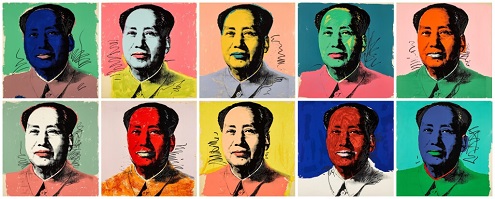
Interactive recreation — his official portrait, screened in four clashing colourways:
Everyday icons
The Velvet Underground & Nico · 1967
The cover Warhol designed for the band he managed — a single bright banana; early copies had a peelable skin revealing the pink fruit beneath. Real artwork ©
1964
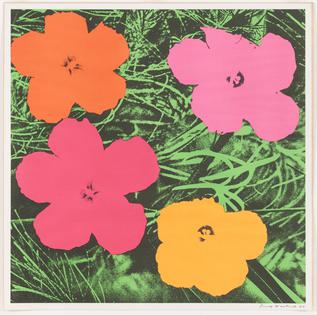
Four flat hibiscus blossoms floating over a photographed field of grass — nature reprocessed as a reproducible, poster-like image. Real artwork ©
1966
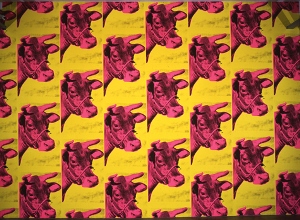
One cartoon cow’s head, screen-printed across wallpaper to cover entire gallery walls — fine art turned into mass-produced décor. Real artwork ©
Real silkscreens, paintings & prints
A gallery of Warhol’s actual artworks — shown here, low-resolution, for study and tribute.
Wrapped in silver foil · 1962–68
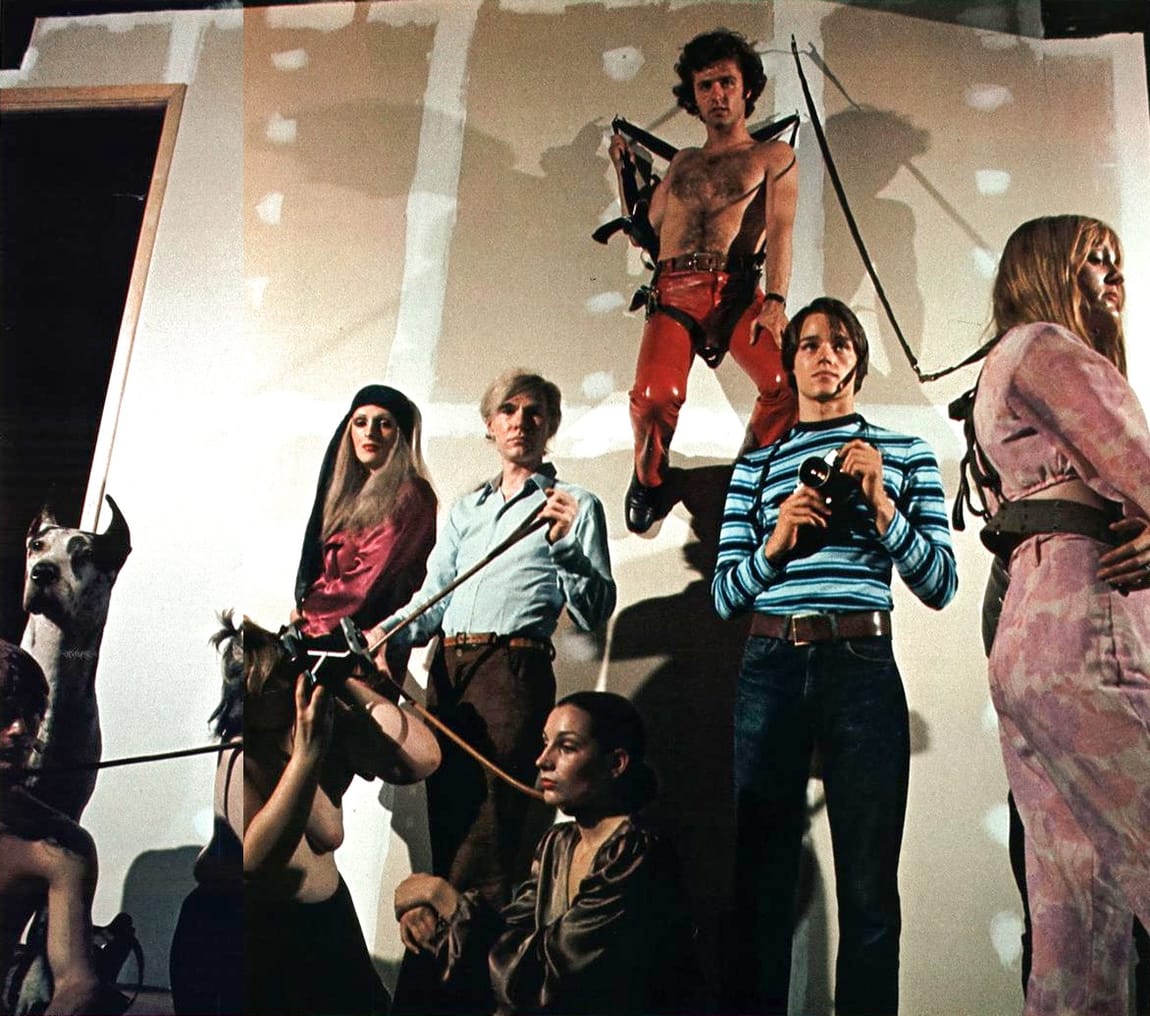
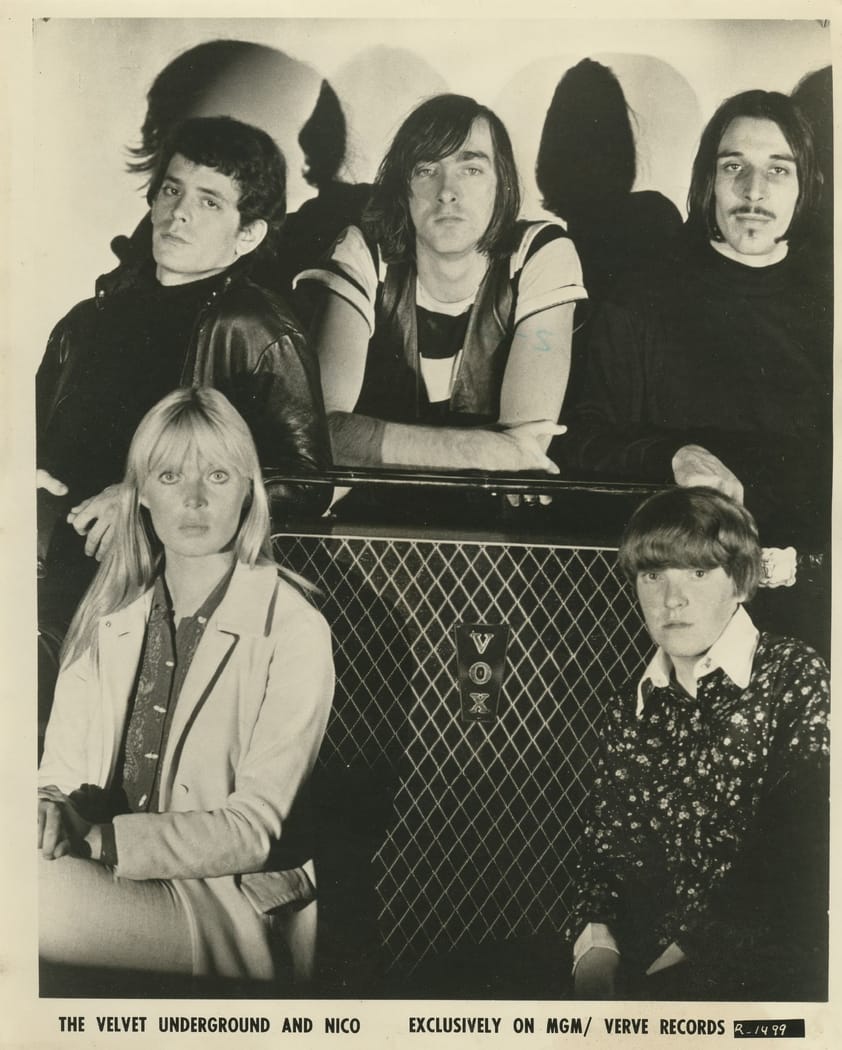
The photographer Billy Name covered the studio’s walls, pipes — even the toilet — in silver paint and foil, turning it into a shimmering machine for making art. Assistants pulled silkscreens like a production line while a 24-hour cast of artists, musicians, drag queens and socialites drifted through.
From this scene came Warhol’s “superstars,” most of his experimental films, and the Velvet Underground, whom he folded into his Exploding Plastic Inevitable light shows. By early 1968 the studio had moved to 33 Union Square West — and it was there, on 3 June 1968, that Valerie Solanas shot him; afterward the Factory grew guarded and businesslike.
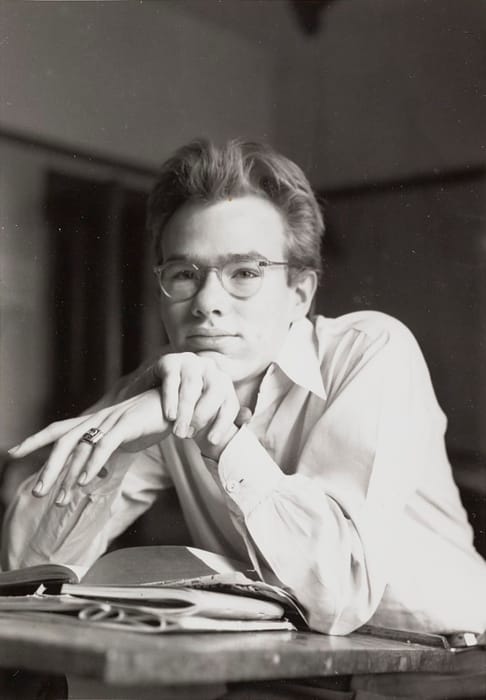
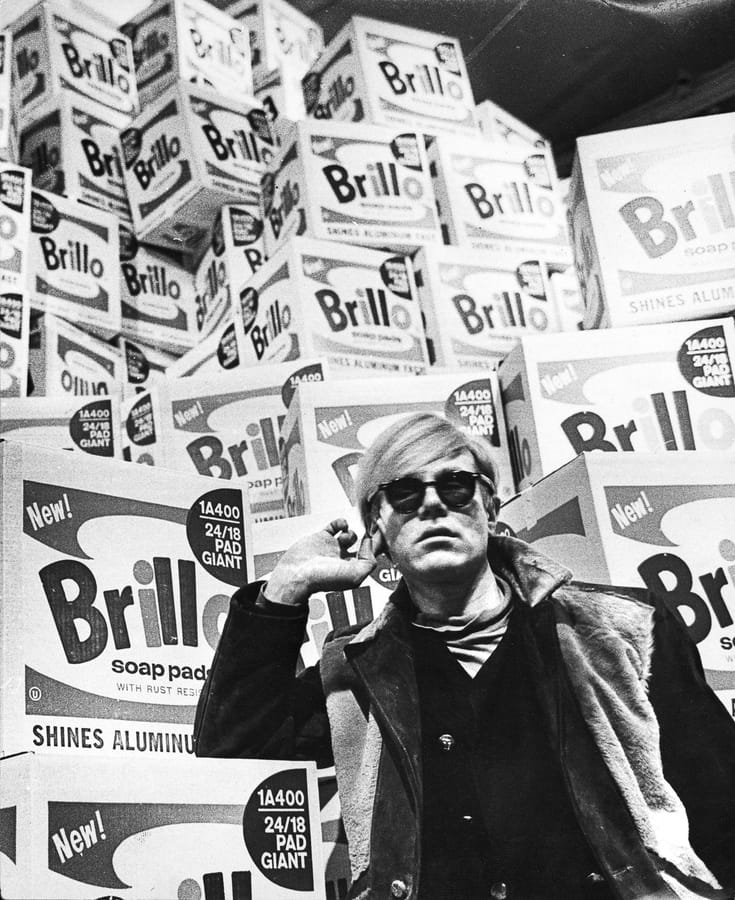
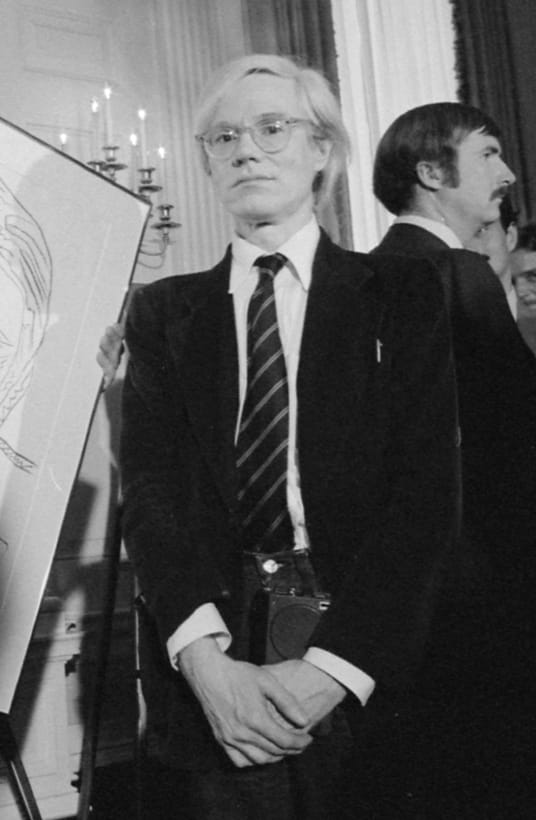
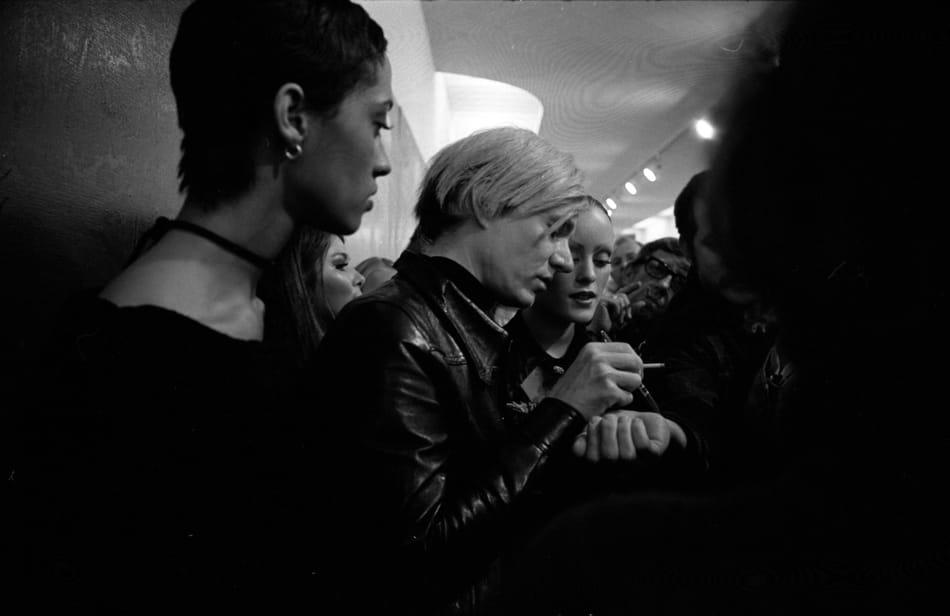
From Pittsburgh to immortality
In his own words
“What’s great about this country is that the richest buy the same things as the poorest. Liz Taylor knows it, the President knows it, the bum knows it, and you know it.”
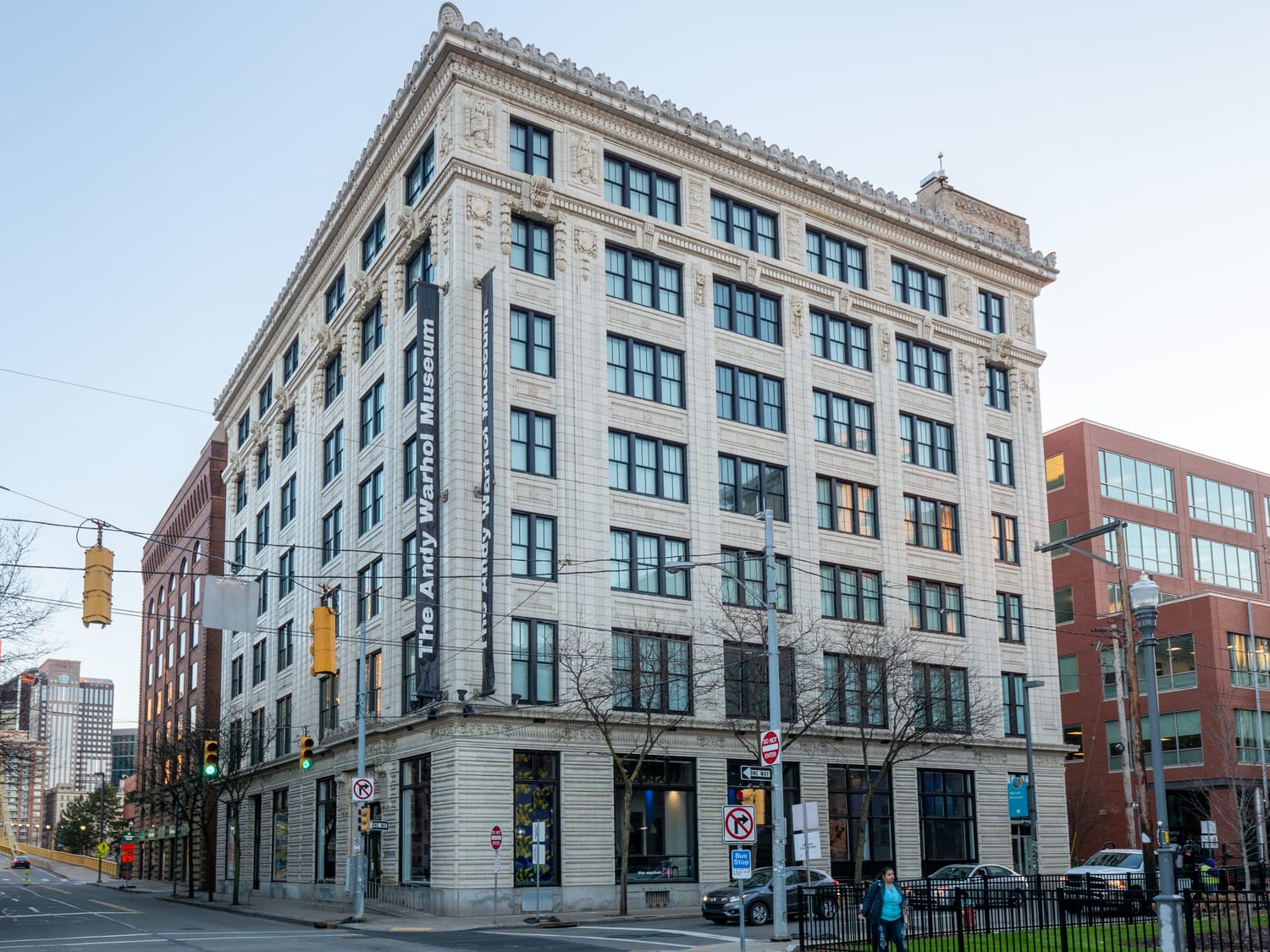
Pittsburgh · opened 1994
Shot and nearly killed in 1968, Warhol kept working — society portraits, the Skulls, the spiky “fright-wig” self-portraits that stare down his own death. He died in 1987 after routine surgery, aged 58.
Today the Andy Warhol Museum is the largest in America devoted to a single artist, and his fifteen-minutes prophecy reads like a description of the world we now live in.
“Making money is art and working is art and good business is the best art.”